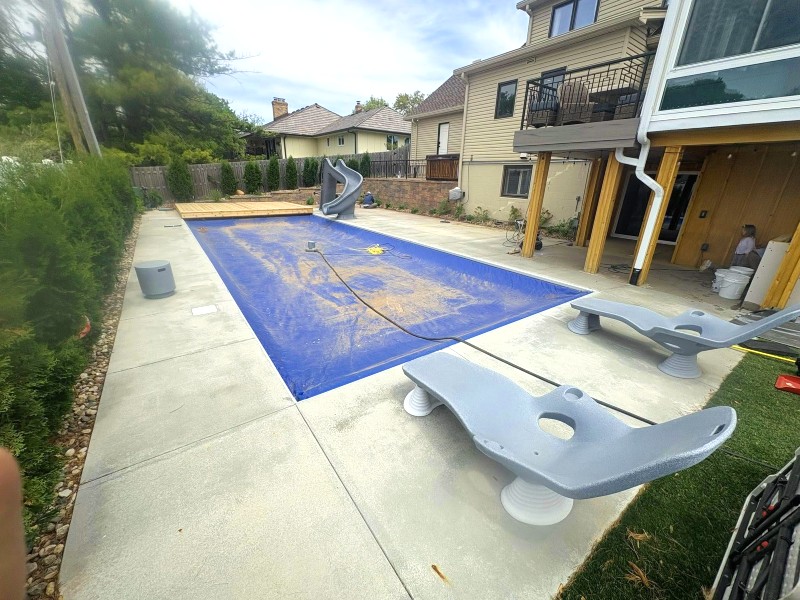
Your pool deck is cracked, dangerously slippery when wet, and scorching hot on summer days. You worry about kids slipping and falling, and nobody wants to walk on it barefoot. The concrete around your pool should be safe and inviting, not a liability.
What We Offer
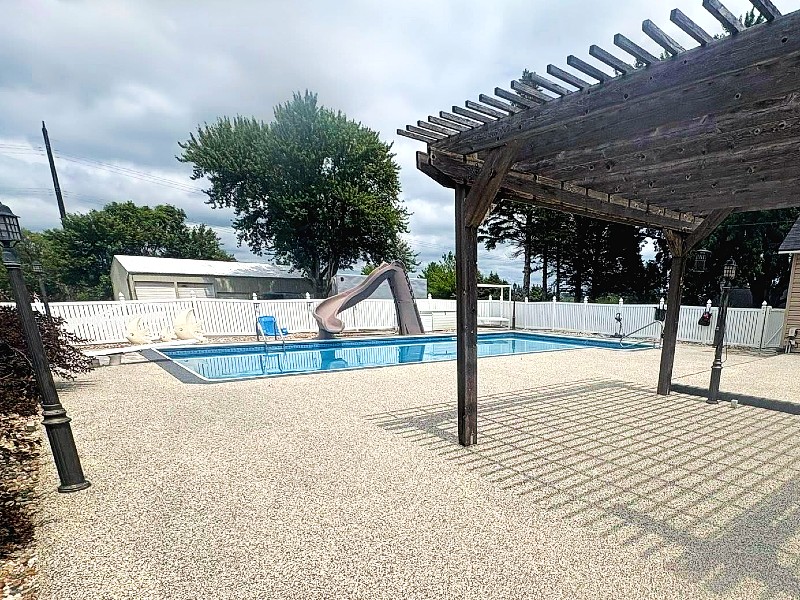
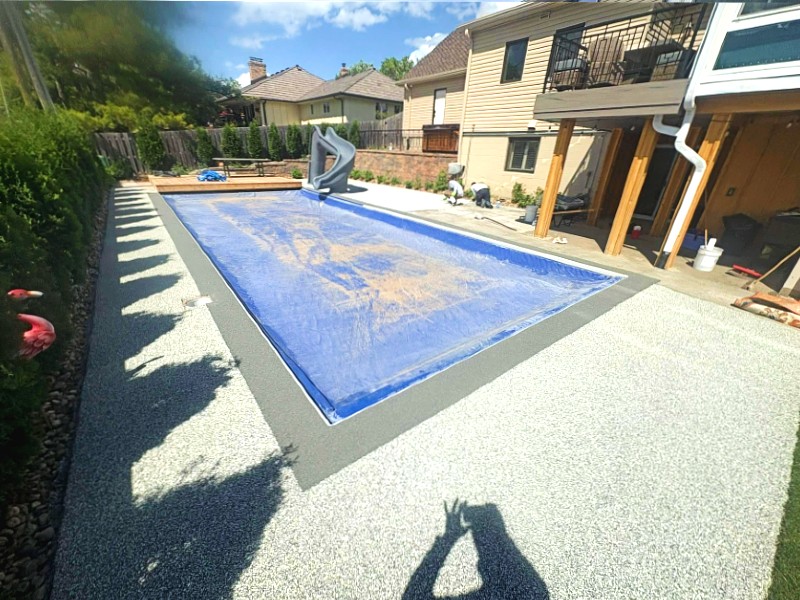
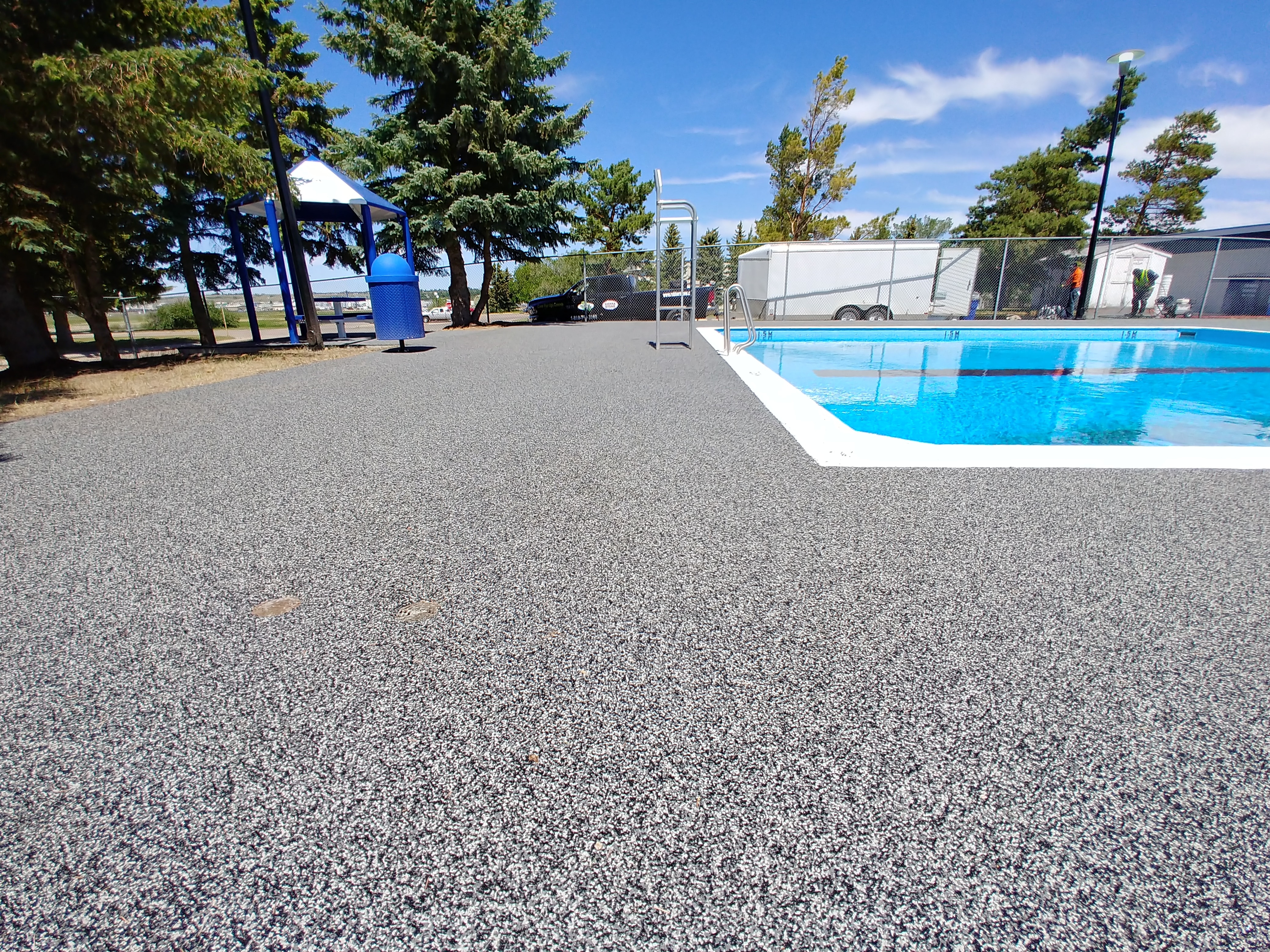
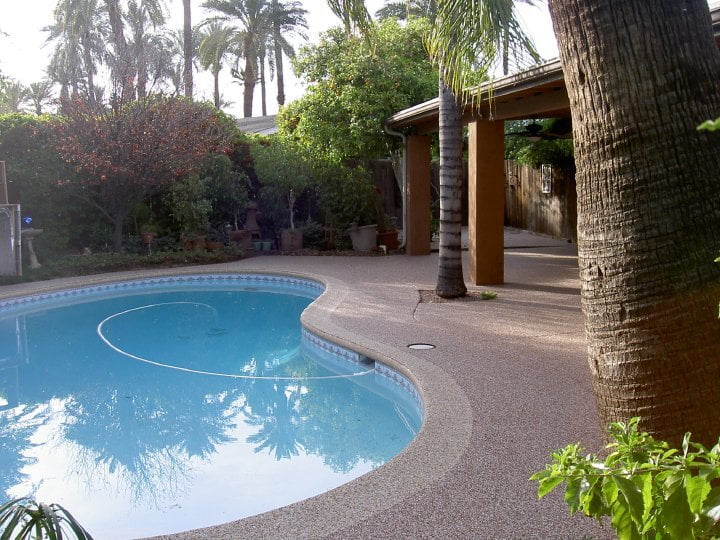
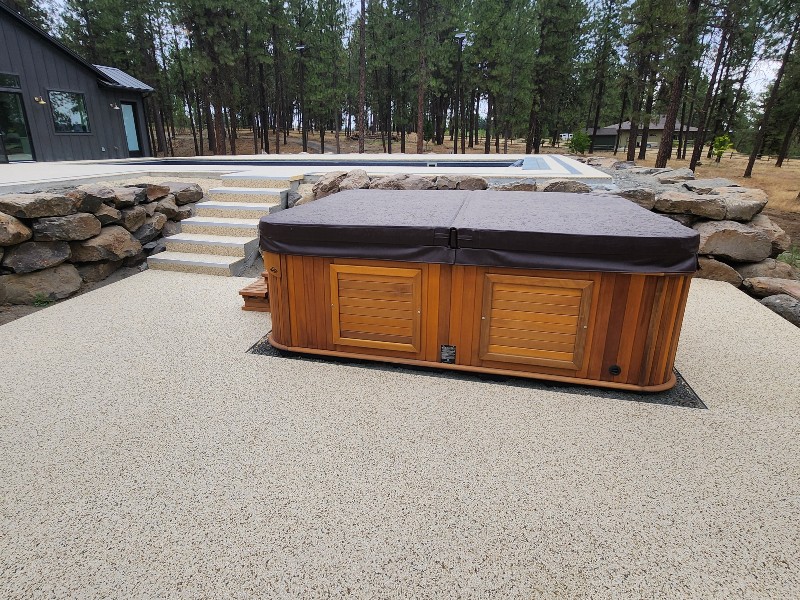
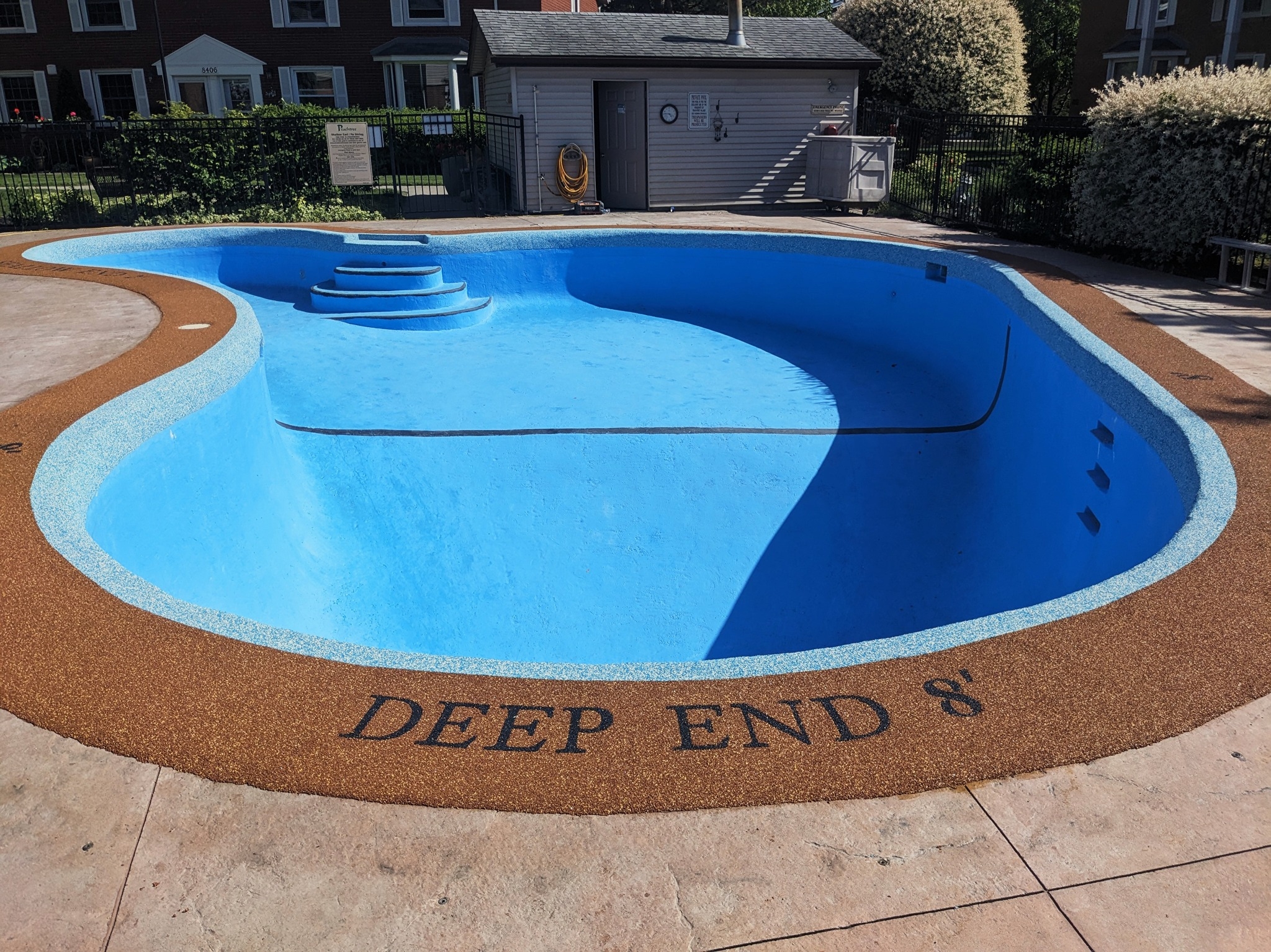
Rubber Stone Omaha specializes in pool deck resurfacing that puts safety first. Our Rubber Stone overlay creates a slip-resistant, cushioned surface that stays significantly cooler than concrete even in direct sunlight.
The slip-resistant texture provides excellent traction even when soaking wet, dramatically reducing the risk of slips and falls. The cushioned surface is gentle on bare feet and provides impact absorption if someone does fall.
Most pool deck projects are completed in one to two days with minimal disruption to your summer activities. Check our gallery for completed pool deck transformations, or contact us for a free safety assessment of your current pool deck.
Pool Deck Resurfacing Features
- Premium Rubber Stone overlay
- Maximum slip resistance
- Heat-reflective surface
- Cushioned comfort underfoot
- Chlorine and chemical proof
- Covers cracks and damage
- Multiple color options
- 5-year product warranty
- Permeable drainage
- Quick installation
Benefits
- Dramatically improves pool safety
- Cooler surface for bare feet
- Increases property value
- Easy to clean and maintain
The Pool Deck Resurfacing Process
- Pool Deck Assessment
We evaluate your pool deck's condition, discuss safety concerns, and recommend the best slip-resistant material and color for your pool area.
- Deck Preparation
We clean and repair your existing pool deck surface, ensuring proper adhesion and addressing any drainage or structural issues.
- Application Process
Our team expertly applies the Rubber Stone overlay with attention to edges, drains, and water features for a seamless, professional finish.
- Safety Testing
We ensure proper drainage, test slip resistance, and verify that all safety features are functioning correctly around your pool area.
- Final Review
We walk through the completed pool deck with you, demonstrate the safety features, and provide maintenance recommendations for long-lasting performance.
Cost & Timeline
Estimated Cost
Pool deck resurfacing generally runs between $15 and $20 per square foot, with the final price depending on the deck size, the color combination chosen, and whether the layout includes steps, curves, or integrated water features. Larger, straightforward decks usually land on the lower end of the range, while compact or detailed pool surrounds with multiple elevations may be priced higher.
As an example, a typical residential in-ground pool deck measuring roughly 25 feet by 20 feet (500 square feet) with moderate surface cracking and a light-colored Rubber Stone application for cooler barefoot comfort would typically cost around $8,000. An above-ground pool deck of 200 square feet in solid condition with a standard Vuba Stone blend might run closer to $3,000. The investment in safety and aesthetics typically pays for itself through increased property value and peace of mind.
Estimated Timeline
A typical pool deck resurfacing project takes one to three days depending on the size and complexity of your pool area. Smaller decks around above-ground pools can often be completed in a single day, while large in-ground pool surrounds may require two to three days.
The new surface is ready for light foot traffic within 2-3 hours and full use within 24 hours. We schedule installations during convenient times to minimize impact on your pool season.
Frequently Asked Questions
Rubber Stone provides exceptional slip resistance, even when soaking wet, making it one of the safest pool deck surfaces available. The material is specifically engineered for wet environments and exceeds industry safety standards for slip resistance. The rubber composition naturally provides traction similar to athletic surfaces and playground safety flooring.
Independent testing shows Rubber Stone maintains high friction coefficients even under wet conditions where traditional concrete becomes dangerously slippery. The textured surface channels water away from the contact area, further improving traction. Homeowners consistently report feeling much more confident walking around their pools after resurfacing with Rubber Stone.
This is especially important for families with young children, elderly family members, or anyone concerned about pool safety. The slip resistance does not degrade significantly over the life of the surface. Even after years of use and exposure to pool chemicals and UV rays, Rubber Stone maintains its safety properties. Many commercial pool facilities and water parks use similar rubber surfacing specifically because of its superior safety record. In Nebraska where pools see intense summer use, having a surface you can trust is essential. Our installations throughout Omaha, Lincoln, and Papillion have dramatically improved pool safety for hundreds of families.
Rubber Stone stays significantly cooler than traditional concrete or darker surfaces, though no surface stays completely cool in direct summer sunlight. The material is designed with heat-reflective properties that reduce heat absorption. On a 90-degree summer day, Rubber Stone will typically be 15-20 degrees cooler than standard concrete and much cooler than dark pavers or sealed concrete. The difference is very noticeable when walking barefoot.
Color selection affects heat absorption. Lighter colors like beige, cream, and light grey reflect more heat and stay coolest. Darker colors absorb more heat but still remain cooler than concrete. Many customers choose lighter color blends for their pool decks specifically for heat management. The rubber composition also does not conduct heat as aggressively as dense concrete, so even when the surface warms, it feels more comfortable underfoot.
The slight cushioning effect of Rubber Stone also makes walking more comfortable compared to hard concrete. In Nebraska summers where pool decks see intense sun exposure, the heat reduction is a major benefit. Families report that kids are much more willing to walk around the pool without shoes on the Rubber Stone surface. If maximum coolness is a priority, we can recommend the best color combinations during your consultation.
Rubber Stone is specifically engineered to resist damage from pool chemicals, chlorine, and salt water. The polyurethane binder used in Rubber Stone is highly resistant to chemical degradation, making it ideal for pool environments. Splashed pool water, chlorine, algaecides, and other pool treatment chemicals will not harm or discolor the surface.
This chemical resistance is a significant advantage over painted concrete or some sealers that can break down when exposed to pool chemistry. The surface is also highly resistant to UV rays, which often cause fading and degradation in pool areas. Colors remain vibrant and true even after years of sun exposure and chemical contact. Vuba Stone, made with epoxy resin and natural stone, also provides excellent chemical resistance, though we typically recommend Rubber Stone for the immediate pool deck area due to its superior slip resistance and comfort.
Regular maintenance is simple. Just rinse the deck with fresh water occasionally to prevent any buildup of dried pool water or chemicals. No special cleaners or harsh scrubbing is required. The non-porous surface does not absorb chemicals or allow algae growth. Many commercial pool facilities use similar rubber surfacing for exactly these durability and maintenance benefits. After installation, you can maintain your pool as usual without worrying about damaging your beautiful new deck surface.
Yes, we routinely resurface pool decks with drains, water features, jets, lights, and other integrated elements. Our experienced installation team knows how to properly detail around these features to create a watertight, professional finish. Deck drains are carefully masked and edged so the overlay integrates seamlessly without blocking drainage. We ensure proper slope toward drains is maintained or improved during installation.
Water features like fountains, bubblers, or spillways require special attention to ensure the overlay properly meets the feature without gaps or rough edges. Our team has worked with all types of pool configurations including infinity edges, beach entries, raised spas, and integrated planters. For pool lights and jets, we carefully work around the fixtures, creating clean transitions that protect the underlying structure. Stairs and entry points receive extra attention to ensure consistent texture and appearance.
The flexible nature of Rubber Stone makes it ideal for conforming to curved edges, steps, and irregular shapes common in pool designs. We have successfully resurfaced decks around above-ground pools, in-ground pools of all shapes, and complex multi-level deck systems. If your pool has special features or a unique layout, we welcome the challenge. During your consultation, we will assess your specific situation and explain exactly how we will handle each element of your pool deck.
Maintaining your Rubber Stone pool deck is remarkably easy and requires minimal effort. Regular rinsing with a garden hose or pressure washer is usually all that is needed to keep the surface looking great. After pool parties or heavy use, simply rinse away any dirt, leaves, or debris.
For more thorough cleaning, use a standard household pressure washer once or twice per season with mild soap if desired. Avoid harsh chemical cleaners, solvents, or acidic cleaning products. Chlorinated pool water splashing on the deck will not harm the surface, so no special precautions are needed during normal pool use. If you spill sunscreen, oils, or food items, wipe them up promptly and rinse the area.
The non-porous surface resists staining, but prompt cleanup maintains the best appearance. Resealing is recommended every 4-5 years to refresh the protective topcoat and maintain UV resistance. This simple process can be done by a homeowner or by our service team. The seal protects against fading and wear from heavy foot traffic and sun exposure. Remove any furniture or accessories from the deck during winter if you close your pool, or leave them in place. The surface is not damaged by freeze-thaw cycles or snow cover. In spring, a good pressure washing prepares the deck for another season of use. With these simple maintenance steps, your pool deck will maintain its safety features, vibrant appearance, and durability for 10-15 years or more.